
FCL vs LCL: Which Is Cheaper for Shipping Building Materials?
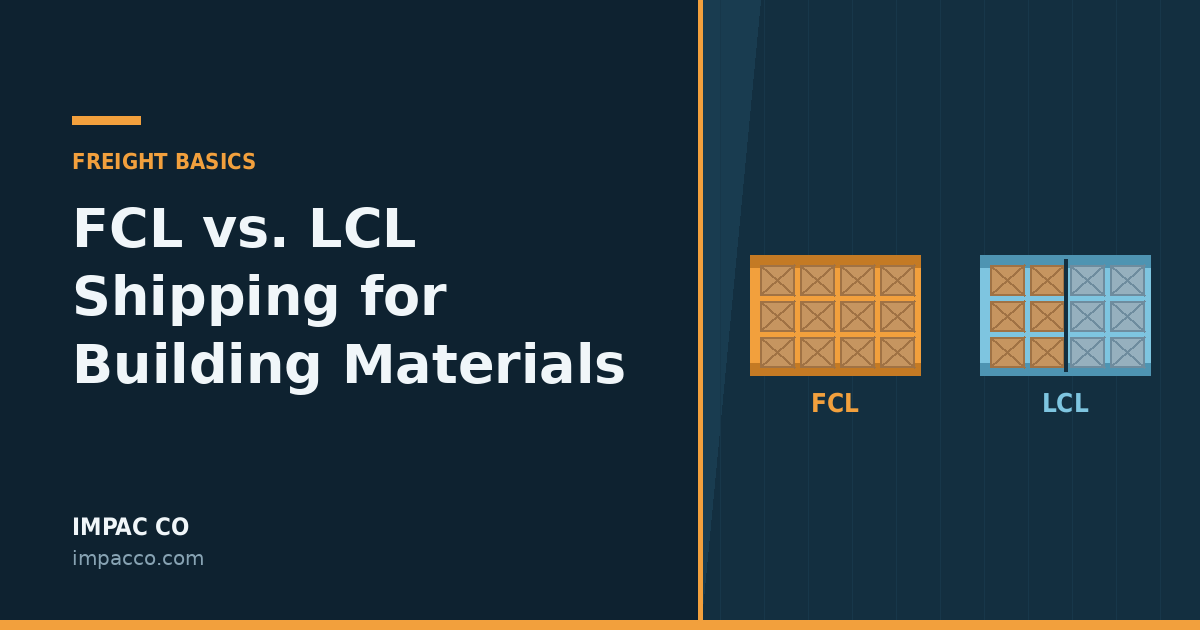
When you ship building materials by ocean, one of the first decisions is whether to book a full container (FCL) or consolidate a smaller load with other shippers (LCL). The choice can make a real difference to your freight bill. Here is how to decide. FCL (full container load) is cheaper per unit when you have enough materials to fill a container, because you pay one flat rate for the whole box. LCL (less than container load) is cheaper for smaller orders because you only pay for the space you use, sharing the container with other shippers. The break-even point depends on your volume.What is FCL?
FCL means your materials get an entire container to themselves. You pay a single rate regardless of how full it is, so the more you ship, the lower your effective cost per unit. For whole-project material packages, FCL is usually the most economical and the simplest to manage.What is LCL?
LCL means your freight shares a container with shipments from other customers. You pay only for the portion of space your materials occupy – which is ideal when you don’t have enough to justify a full container. LCL (and its trucking equivalent, LTL) typically suits freight between roughly 150 and 15,000 pounds.How to decide between FCL and LCL
As a rule of thumb: if your order would fill most of a container, FCL wins on cost and handling. If it would leave a container half-empty, LCL usually saves money. Other factors matter too – FCL can mean less handling (lower damage risk) and more predictable timing, while LCL maximizes value on partial loads. Because the break-even depends on exact volume, weight, and destination, it’s worth asking a freight specialist to price both. Impacco handles FCL and LCL to Alaska and Hawaii and can advise which is the better economics for your specific order.Frequently Asked Questions
Is LCL always slower than FCL?
Not necessarily, but LCL can involve extra handling for consolidation and deconsolidation. For time-critical items, ask about FCL or air cargo.
What weight range suits LCL/LTL?
Roughly 150 to 15,000 pounds. Above that, a full container load is usually more economical.
Can Impacco quote both options?
Yes – share your materials list and destination and we’ll compare FCL and LCL pricing.
Related Guides

Related posts

How to Source Building Materials for a Remote Alaska Project
Remote Alaska projects raise a sourcing problem you won’t face on the main
What’s in a Full House Package for a Remote Build?
A full house package for a remote build includes every material needed from foun
How to Load a Container to Maximize Space
Ocean freight is priced by space and weight, so how a container is packed has a